
Peachtree Corners Directory Collections
Historical Peachtree Corners research rests on a group of verified collections rather than one continuous city directory run. The modern city did not exist as a municipal body until 2012. Older entries often sit under Norcross, a metro telephone exchange, or Gwinnett County. The strongest coverage table therefore records what is truly held and states the gaps plainly.
| Collection | Years | Where held | Access |
|---|---|---|---|
| Metro telephone directories | Verified examples from 1968, 1972, 1974, 1976 | Library of Congress / Digital Library of Georgia | Free digital page images |
| Gwinnett census film | 1820–1920, except 1890 | Gwinnett County Public Library | Branch microfilm; library help |
| Local newspapers | Named runs from 1871–2008 | Gwinnett County Public Library | Microfilm; article or obituary request |
| 1890 tax digest | 1890 | Gwinnett Historical Society | Indexed publication and library |
| Family, town, school, church files | Item-specific, county history from 1818 | Gwinnett Historical Society | Visit or contact; mixed web access |
| General Name File | Source-dependent historical cards | Georgia Archives Virtual Vault | Free online packets |
No official local catalog located an exact Peachtree Corners or Norcross Polk publisher run, reverse-directory shelf span, or first and last printed year. Treat generic city-directory guidance as help for reading a verified volume, not proof that a local volume exists.
Peachtree Corners Under Norcross
Municipal records begin in 2012, but the community's paper trail is much older. Paul Duke began planning Technology Park in 1967, and Peachtree Station followed in 1979. Telephone books from that era use Norcross-area entries or broader Atlanta and Gwinnett exchange labels. A researcher who searches only the words Peachtree Corners may miss the right household.
The official Peachtree Corners history sets out that development sequence.
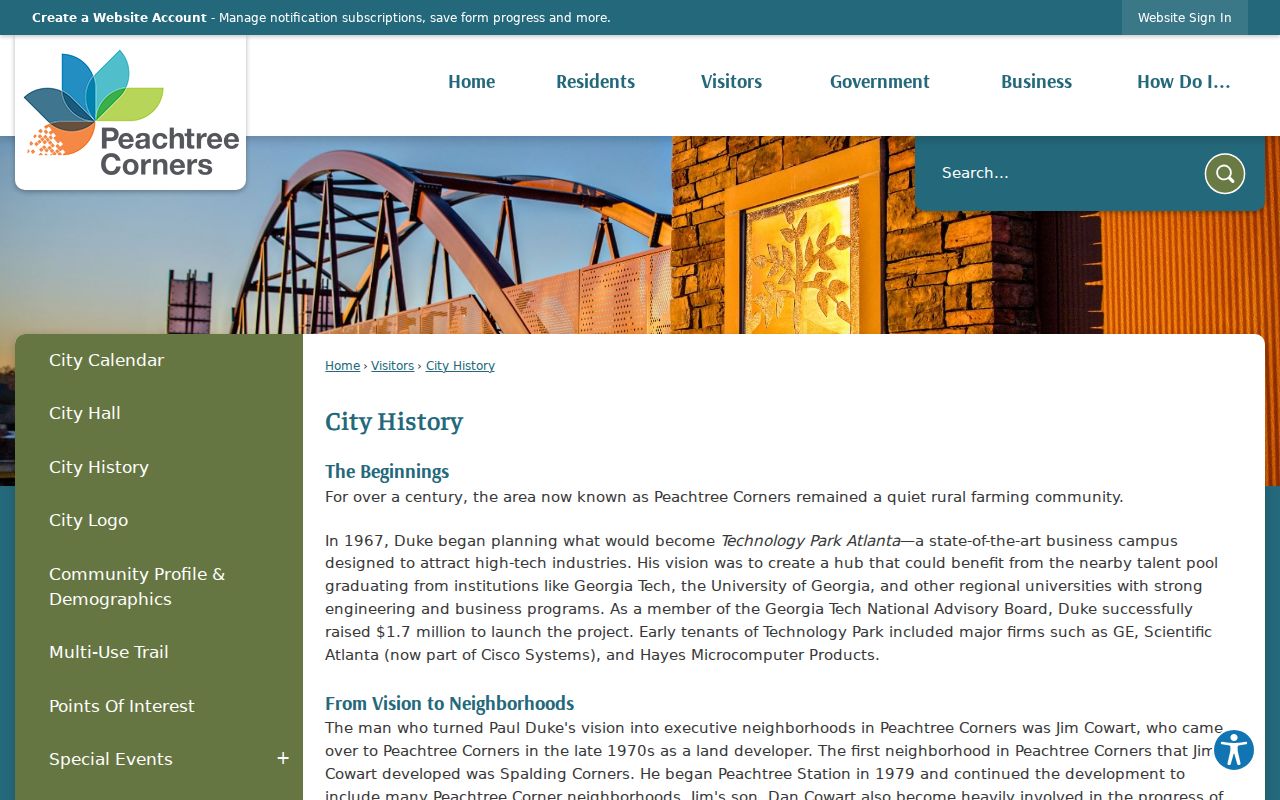
The city-history screen explains why directory geography changes over time. Test Norcross, Duluth, rural-route forms, and a known road while keeping the modern parcel as the geographic anchor.
| Year | Local record milestone |
|---|---|
| 1818 | Gwinnett County was established. |
| 1871 | The courthouse fire destroyed many earlier land and court records. |
| 1967 | Paul Duke began Technology Park planning. |
| 1979 | Peachtree Station development began. |
| 2012 | Peachtree Corners municipal operations began. |
This timeline sets the right keeper for each era. County, church, newspaper, census, and telephone sources carry the early trail; city clerk and business files become relevant only after incorporation.
Verified Peachtree Corners Telephone Books
The authoritative telephone-directory collection includes a November 1968 Atlanta Northeast, Northwest, and South volume with Norcross-area entries, a 1972 metro volume with the Norcross exchange, a March 1974 Lawrenceville book, and a 1976 Greater Metro Atlanta volume naming Duluth, Lawrenceville, and Norcross coverage. These are examples, not a continuous run.
A personal entry usually gives a surname, given name or initials, sometimes an honorific, street number and name, locality abbreviation such as “Norc,” and a seven-digit phone. Rural-route or road-only addresses occur. Unlike a classic Polk city directory, the telephone book does not reliably state spouse, occupation, owner status, or widow notation. Search OCR as a finding aid, then read the scanned page.
Note: The best directory label for a 1970s Peachtree Corners address may be the Norcross exchange, not the present city name.
Read a Peachtree Corners Directory Entry
Identify the source before interpreting its marks. A verified local telephone entry is sparse. A true city directory found in a database may contain more detail, but that richer format cannot be assumed for the Gwinnett telephone examples. Photograph or save the title page, publication year, abbreviation key, and entry page together.
| Name | Surname plus given name or initials; honorific may appear |
|---|---|
| Address | House number and street, or a rural-route form |
| Locality | An abbreviation such as “Norc” may identify the exchange area |
| Telephone | Seven-digit number in the inspected 1968 book |
| Image citation | Volume, date, page, and stable collection link |
- Criss-cross directory
- A volume or section arranged by street and house number instead of surname.
- Householder index
- A listing centered on the person named as the household head.
- Abbreviation key
- The publisher's legend for place names, occupations, and entry marks. Save it before decoding a line.
Ancestry Library Edition at GCPL includes directory and image collections but requires an in-library connection and a valid library barcode and PIN.

Search the catalog within the library session and inspect the actual volume metadata before assigning a year or publisher to Peachtree Corners.
Peachtree Corners Newspaper Bridges
When a city directory entry disappears, GCPL newspaper microfilm can supply an obituary, sale notice, family event, or address clue. Exact local runs include the Weekly Gwinnett Herald from June 1871 through December 1897, News Herald from July 1894 through January 1965, Gwinnett Daily News from February 1965 through September 1992, and Gwinnett Daily Post film from September 1995 through December 2008. Several shorter and overlapping county titles fill more dates.
The Lawrenceville reader can print, save to a thumb drive, or email images. Patrons may book a librarian or submit an article or obituary request. A date and likely paper save hours of frame-by-frame review. This access channel is important when home databases do not expose the needed scan.
Peachtree Corners Census Companions
A directory line rarely identifies the full household. Census schedules can add ages, relationships, birthplaces, and other fields that vary by year. GCPL holds Gwinnett census microfilm from 1820 through 1920 except 1890. Federal schedules are currently public through 1950 under the 72-year rule.
HeritageQuest guidance from GCPL describes remote access to indexed censuses, pension records, family-history books, and research aids.

The remote option complements branch microfilm. Match the directory address to the census place or enumeration district, then compare names rather than assuming identical initials mean the same person.
Bridge Peachtree Corners in 1890
The 1890 federal population schedule is missing from the GCPL census sequence. Gwinnett Historical Society's indexed 1890 tax digest is a useful substitute. It can name a taxpayer or likely household head and give militia district, land district or lot, acres, and value. Those fields can tie a same-named person to deed geography.
It is not a census replacement in every sense. The digest does not recreate all family relationships. Pair it with deeds, surviving newspapers, probate, church lists, cemetery files, and later census years.
Local scale. The Society's family history volume contains 461 family histories, 324 photographs, and an index of 39,439 names.
Peachtree Corners Research at GHS
The Gwinnett Historical Society genealogy library occupies Room 210 on the second floor of the Historic Gwinnett County Courthouse, 185 West Crogan Street in Lawrenceville. Listed hours are Monday, Wednesday, and Friday from 10 a.m. to 2 p.m. Researchers may call 770-822-5174 or email ghs@gwinnetths.org.
Its holdings include more than 1,600 publications plus town binders, a Norcross binder, Gwinnett family binders A–Z, school, church, cemetery, map, photo, place, and subject files. Some archive indexes and church or government records are public online. Other family, cemetery, manuscript, publication, and visual categories are member-gated, though the physical research library remains an access route.
The First Families files document descendant chains from ancestors present by 1820, 1850, or 1880. Research copies omit the present applicant's address, email, and phone, preserving the proof chain without exposing current contact details.
Peachtree Corners in Georgia Archives
The Georgia Archives adds print city directories, county histories, family genealogies, microfilm, and onsite databases. Its Virtual Vault General Name File is a card index built from state, local, and personal records. Choose a surname's first letter, then inspect a name-span packet of roughly 40 to 60 cards. The packet is not full-text searchable, so visual reading is essential.
Georgia Archives research services explain the catalog and in-person options.
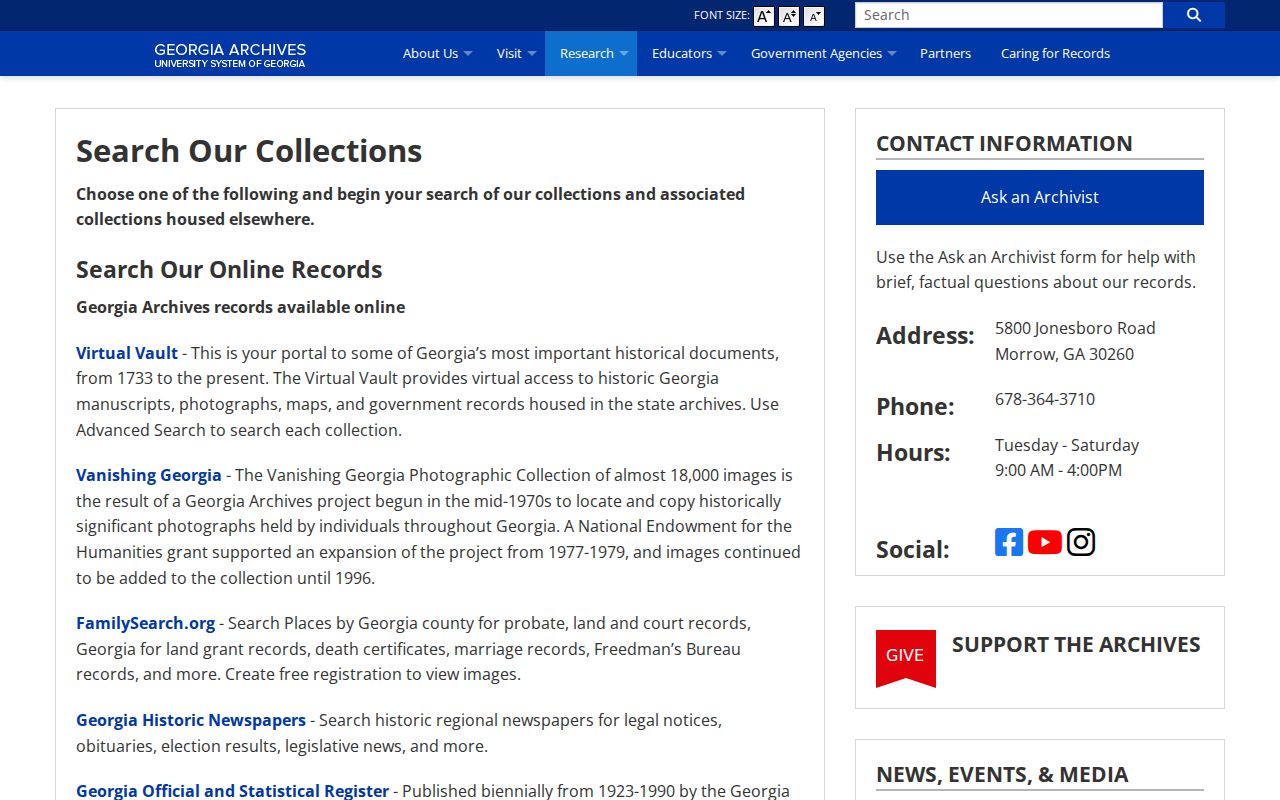
County microfilm cards identify record groups and courthouse losses. Most county film stops around 1900, though a volume begun earlier may continue and a few later exceptions exist.
Modern Peachtree Corners Directory Records
The historical shelf ends before city government begins. For post-2012 organizations and local sites, the city publishes monthly “Business Licenses Issued” PDFs, with online lists spanning at least 2023 through 2026. They are not household directories, but they can confirm a business name, location, ZIP, and certificate timing.
The Peachtree Corners new-business archive is pictured below.
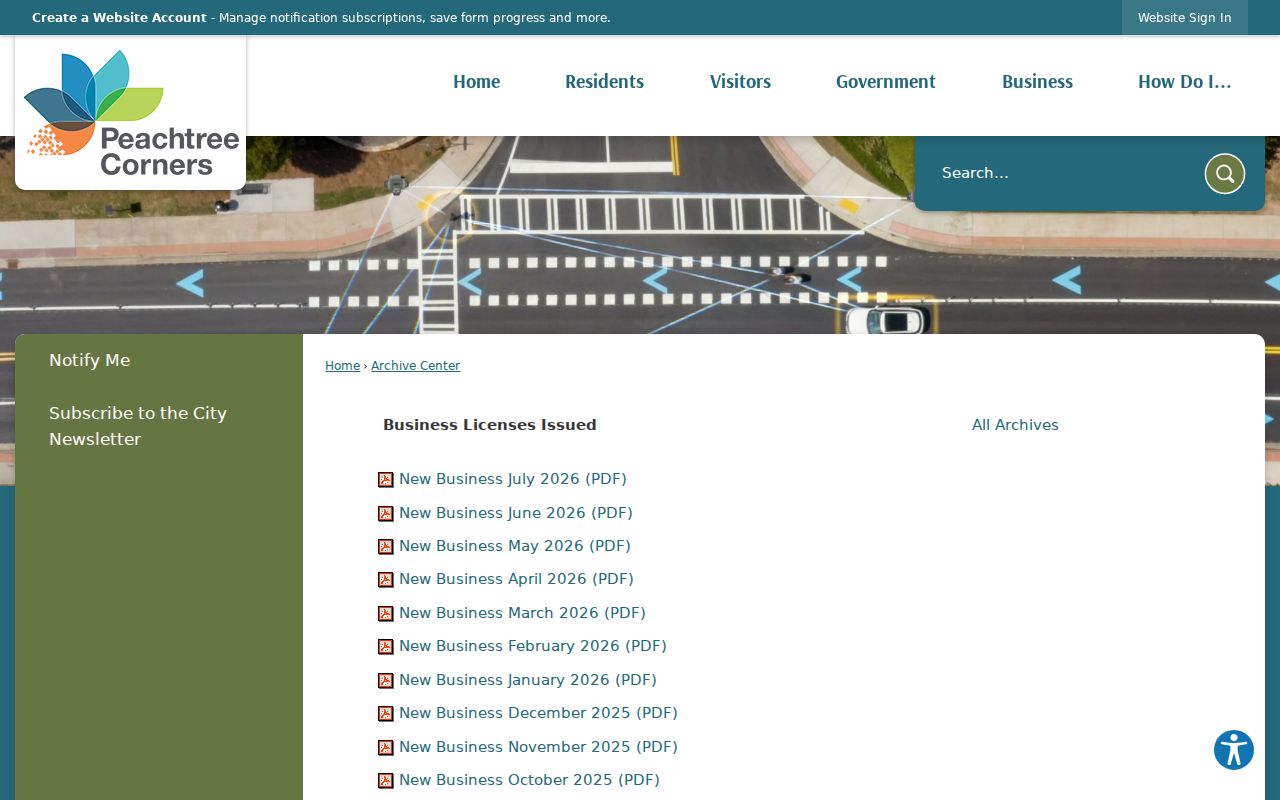
The archive also shows why 30071, 30092, and 30360 can all appear in municipal records. A ZIP or postal city is not the same as the incorporated boundary.
Trace Peachtree Corners Family History
A city directory finding becomes stronger when it is linked across time. Preserve spellings, initials, locality labels, phone numbers, and exact image citations. Then compare sources that were created for different purposes. A deed proves a conveyance; a census records a household snapshot; an obituary may identify kin; a telephone listing simply connects a listed subscriber with an address and number.
- Start with a verified address and identify its period place label, often Norcross or unincorporated Gwinnett before 2012.
- Browse the closest metro telephone volume by surname, street, or exchange. Record the page, initials, locality, and phone.
- Pair the nearest census year. Use enumeration-district maps for 1950 or GCPL's film for earlier Gwinnett schedules.
- Bridge other years with the 1890 digest, tax rolls, deeds, newspapers, probate, church, school, and cemetery files.
- Follow a death date into the exact newspaper run, then seek an obituary through the branch reader or request service.
A missing entry can mean a move, death, name change, unlisted number, publisher gap, or OCR failure. It proves none of those by itself. The modern Peachtree Corners street directory can reconnect an old address to its current parcel and legal description without replacing the historical collection work.